
Rooted in nature, nurturing hearts, branching into brilliance
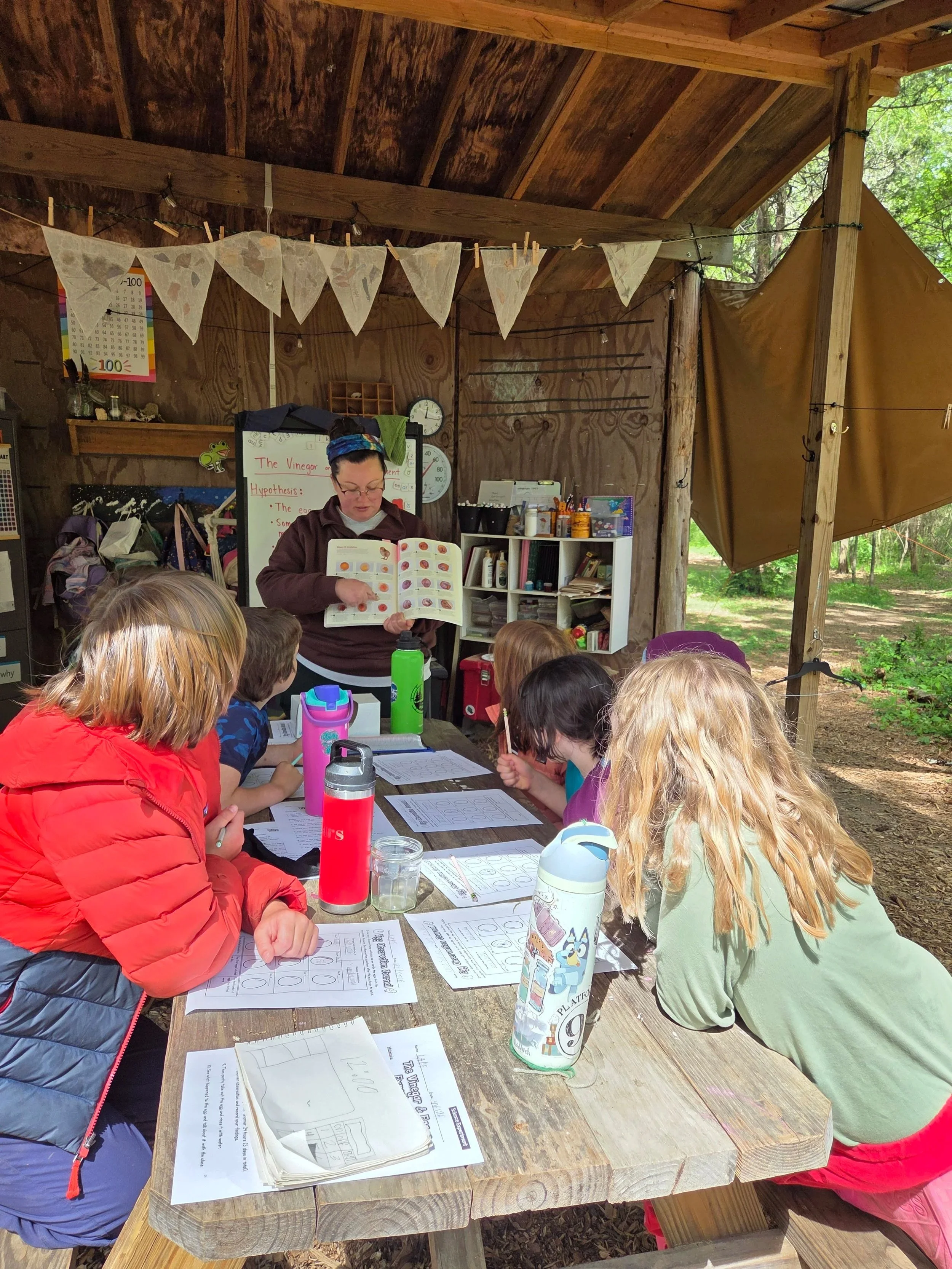
Biology Class: amniotic structureFor the Children Who Kept Asking
BlueBird Wild School grew from a need. Families who'd discovered forest school in the pre-K and Kindergarten years were finding few options to continue it past those grades — and the elementary forest schools that did exist were often neither as academically structured nor as nature-immersive as families hoped.
We designed BlueBird to be both: a full-time, academically whole, fully outdoor forest school program where children spend every day outside (except in severe weather), receiving standards-aligned instruction in academic subjects — and also playing, building, hiking, getting dirty, and creating community. The aim was simple: to extend forest school learning, with the body and the mind and the heart, past Kindergarten and into the years that follow.
Where to Wander Next

Our Roots
Where the school's philosophy meets the daily life of BlueBird. How we teach, how the day is structured, and how we keep every child safe within the 130-acre sanctuary of Audubon Acres.
Forest school 101
Safety & Trust

Admissions
The practical layer of joining BlueBird. Tuition, term dates, gear lists, weather protocols, and the answers to every question a family asks before their child's first day.
Enrollment
Calendar

Forest Logs
A monthly field journal from the woods — what the children noticed, what the seasons are doing, and the small discoveries worth carrying forward. Read the issue, or have next month's delivered to your inbox.
Read about our experiences in nature
Subscribe to our monthly newsletter
❊ FAQs
Before the First Day
-
Bluebird Wildschool operates as a homeschool tutorial program
Parents will receive comprehensive progress reports quarterly which outline student progress in academic areas as well as areas of social emotional learning, physical wellbeing, and environmental awareness. Progress reports will also include up to date attendance kept by teaching staff for your student’s onsite learning days.
-
Bluebird Wildschool Age Requirements and Prerequisites follow the Hamilton County school guidelines.
Kindergarten: 5 by August 15
1st Grade: 6 by August 15 and has completed Kindergarten
2nd Grade: 7 by August 15 and has completed 1st grade
3rd Grade: 8 by August 15 and has completed 2nd grade
4th Grade: 9 by August 15 and has completed 3rd grade
5th Grade: 10 by August 15 and has completed 4th grade
-
Students must be able to follow directions, adhere to forest school rules, and communicate their needs effectively. They will be expected to show respect and kindness to their teachers, community members, and fellow students.
Classroom and forest safety rules and expectations will be established and made clear to the students. Students will be expected to follow these at all times on school grounds, even after school hours. Children must be completely toilet-proficient (potty trained) in order to attend. They must be able to know when they need to use the restroom, be able to communicate that, and independently handle all toileting. Students will use designated outdoor areas for going pee (pre-established private tree protected zones) and use the indoor restroom for going poo.
-
Are the kids outside all day every day?
Yes, our classes are held outside every day. Please dress your child for the weather each day. Please see our “What Will My Child Need For the Forest/Gear List” for more information on how to dress appropriately for the forest. The students will observe, experience, and learn about all kinds of weather and the rhythms of our seasons.
In the event of rain, we typically enjoy getting wet and muddy. However, we have a sound shelter to work under if we need a dry space. In the event of severe weather developments (thunderstorms, heavy rain, hail, etc.) we will move indoors to Walker Hall until the storm has passed.
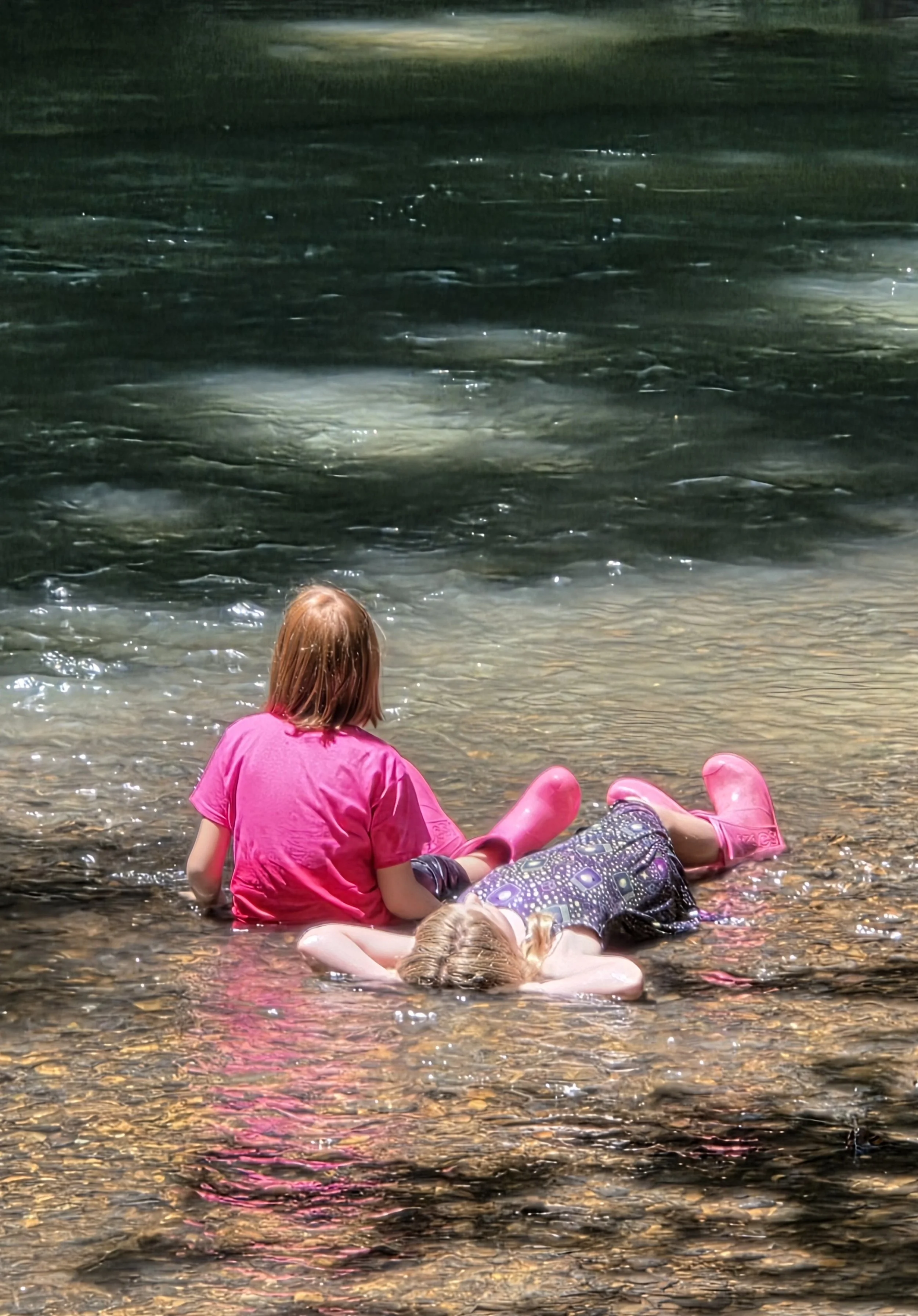
In warm weather, we will make time for creek play to cool off, remind each other to hydrate and refill water bottles throughout the day, and check in with our bodies to notice the need to remove outerwear to cool down.
During cold seasons, we will have fires in our fire circle each day, plenty of active play time, and reminders to check in with our bodies to help us stay warm.
What about severe weather?
If weather conditions for the day are expected to be severe and potentially dangerous (an entire day not expected to get above 20 degrees, icy roads, or tornado conditions) a whatsapp message will be sent out by 7pm, the night before, notifying parents that school has been canceled for the day. We will not always follow Wauhatchie School and Hamilton County’s school cancellations, but will take them into consideration.
-
What food and snacks will my child need for the forest?
Bluebird Wildschool strives to practice Leave No Trace as much as possible. We encourage families to send snacks and lunches in reusable containers or with minimal or compostable packaging. We eat outside and don’t have a refrigerator. Please provide your child with foods which keep well in the weather and/or pack cold packs with their food. In cold weather, we recommend more substantial snacks such as cheese, nuts, and other filling items that will help to provide extra energy.
Teachers are aware of any allergies present in their class from the information provided on the emergency form. Children are not permitted to share foods from their lunchboxes with other students due to the dangers of potential allergen transmission.
Please send your child to school with enough food for a morning and afternoon snack, lunch, and full water bottle. Clean water to refill water bottles is available at the school site.
-
Drop-off is at 8:30 AM at the end of the Audubon Acres boat launch; pick-up is at 3 PM at the same location. In the event of very wet or severe weather conditions, the pickup or dropoff may be moved to Walker Hall. If this occurs, teachers will notify parents of the adjustment via WhatsApp. Our daily student trail leader will walk children to and from the classroom site.
Arrival as early as 8:15 am and pickup as late as 3:15 pm are permitted in the event of need. If you need to drop off or pick up outside these times, in an extenuating circumstance, please communicate this with your teachers ahead of time.
-
Our staff are Wilderness First Aid and CPR certified, with a 6:1 child-to-teacher ratio (among the lowest in the region). We conduct daily site risk assessments. Site boundaries and expectations are set (with student participation) at the beginning of the school year, and are reviewed frequently, to establish safe play and exploration areas. Audubon Acres has a gated, dedicated entry, and exit point with a Visitor’s Center check-in requirement. More detail available on the Our Roots page.
What are the classroom and forest safety rules and expectations?
We have established the following rules to provide consistent boundaries for the safety of our students and their families. We ask that parents observe these same rules and expectations while on school grounds, even after school hours, in order to help us maintain consistent safety practices.
The children are always within eyesight and earshot of an approved adult. During school hours, students stay inside established boundaries where teachers can see and hear them and they are able to see and hear teachers and call for help if needed. Teachers carry emergency forms and a first aid kit at all times.
After school, a parent or guardian must be in observation of students at all times as they play and explore. There are always two or more adults onsite at all times.
Toys: Please do not bring toys from home. Nature provides everything we need for play; and toys from home tend to be distracting and get lost, broken, or dirty. If your child has an essential comfort object from home which they cannot cope without, let us know and we can work out an exception.
Boundaries: Safe boundaries for play and exploration will be established with the students and reviewed frequently. Students will be expected to stay within these boundaries at all times without express teacher permission to go outside boundaries (for specific reasons and under teacher supervision).
Stick Safety: We always jokingly say that 90% of forest school is stick management. It IS a very important part of forest safety for kids. For their safety, children may not play with any stick that is longer than their arm. If a stick is longer than a child’s arm, it may only be used as a walking stick or for building a fort. If it is too long for safe play, one of the stick must stay on the ground at all times.
Tree Climbing: Children may climb trees at school under adult supervision. Students may not climb higher than twice their height and only after they have demonstrated competence. Adults will not assist a child to climb up a tree they are not able to climb safely on their own. If they can’t get down, we will help them.
Fire Safety: Students may only be near the fire while under the supervision of their teacher(s). Students will help to collect kindling and firewood, but the teachers are always in charge of adding fuel to the fire. Students may only be near the fire or cook over the fire with direct teacher supervision.
Water Safety: Tending our site pond or visiting the creek are fun activities students may only do under the full supervision of the teachers. Students are permitted to wade in slow-moving water only as high as their boot tops or below their knees if wearing water shoes. Clothes, boots, and children will get wet on creek days and rain days. Please always ensure that your children have a change of dry clothes and socks in their backpack for their comfort.
Eating Nature: Students should never eat or drink any substance they find outdoors in nature without direct teacher permission.
-
Audubon Acres is a bird sanctuary; so we share the woods not only with countless species of birds, but also with deer, foxes, coyotes, snakes, beavers, and many more. Children learn to observe wildlife respectfully, give animals space, and to identify safety-relevant species. Encounters with anything dangerous are rare — but situational awareness is part of the curriculum.
"Nature is a tool to get children to experience not just the wider world, but themselves."
— Stephen Moss
Quiet observations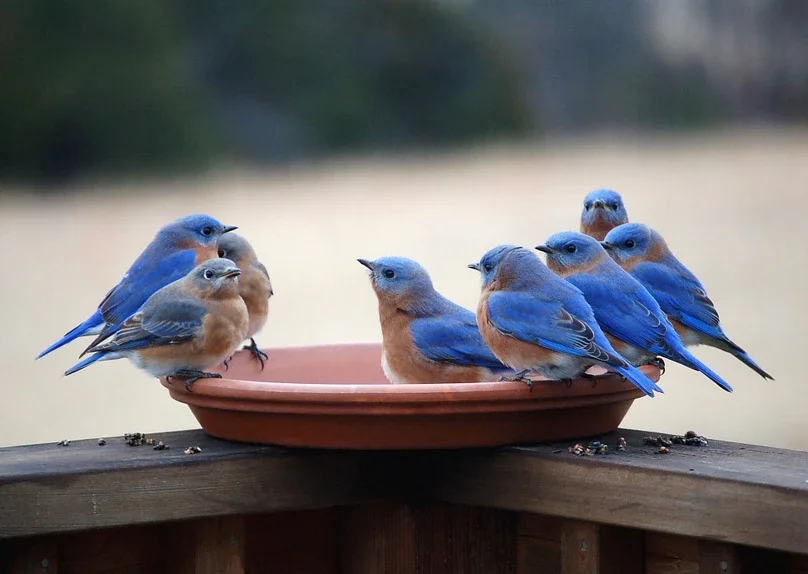
Photo by Danny Brown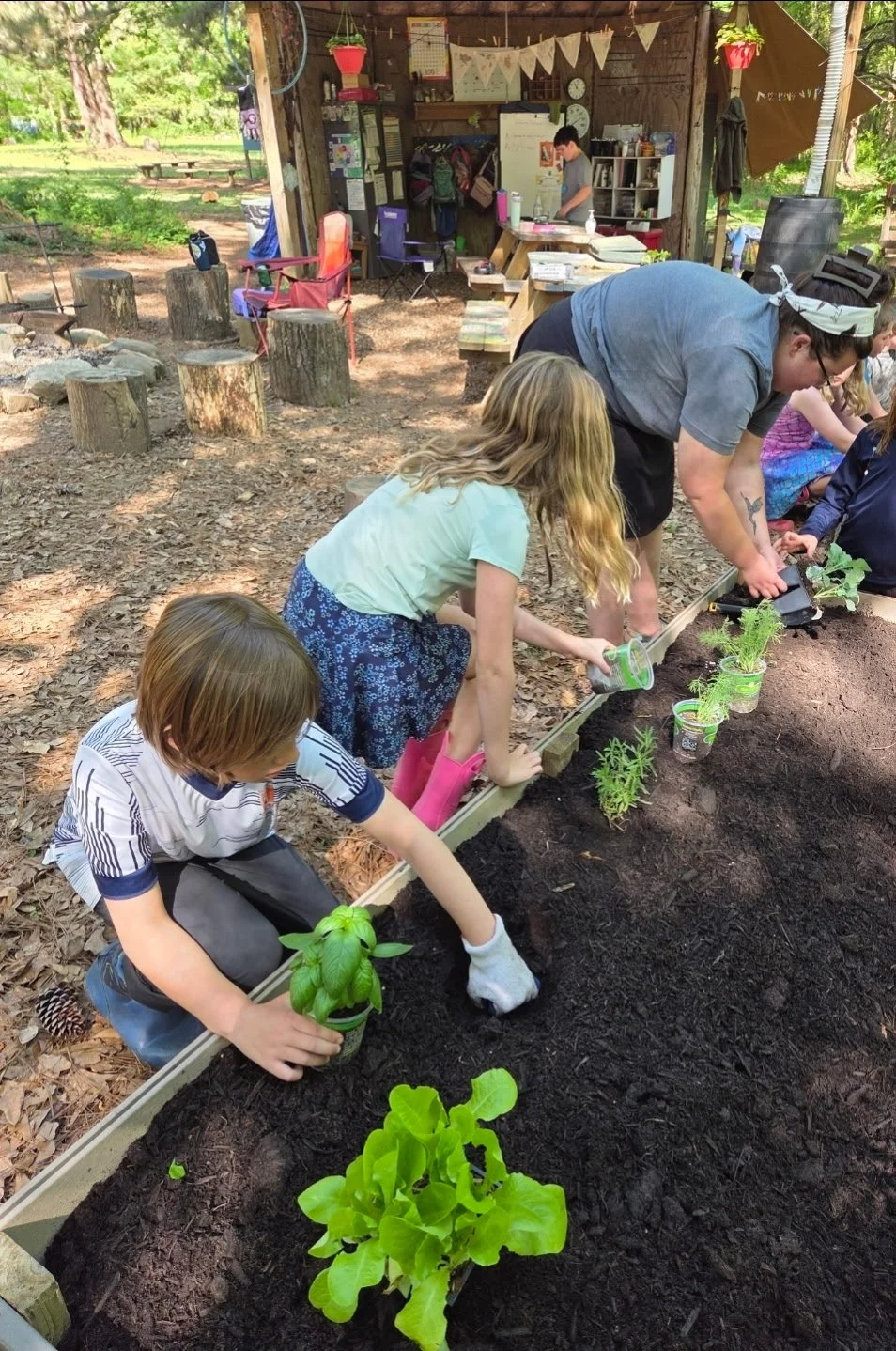
Botany class